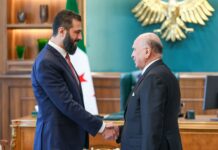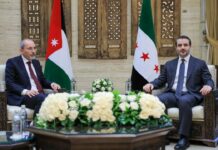

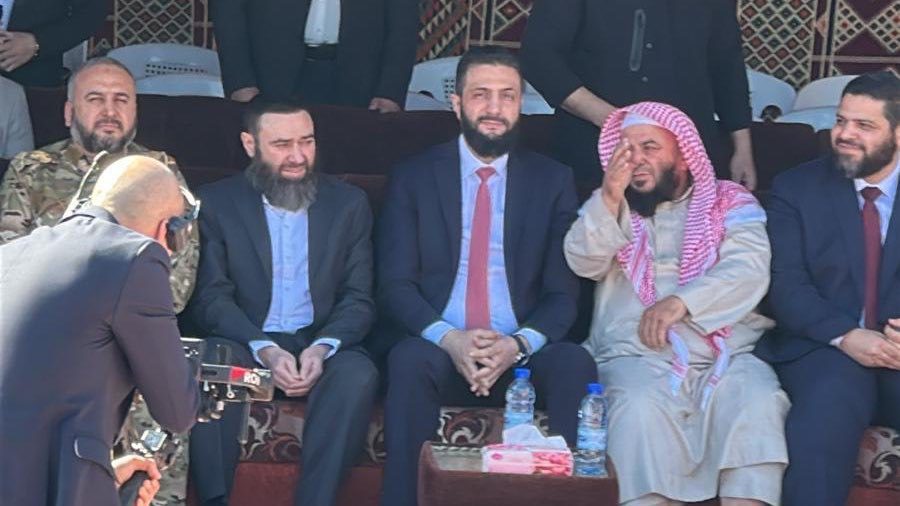
Crowds gathered in Douma, filling the central square with anticipation. Camels were tied near the square, as a tent was raised. Some carried flags, others held up phones, waiting for a glimpse of a man absent for nearly a year. When Issam Bouidani finally arrived alongside Syria’s President Ahmad al-Sharaa, the moment felt like a monumental turning point. For many, it was not just about a return. It was what that return might mean for Syria’s shifting political landscape.
A Homecoming Framed by Diplomacy
Bouidani’s release from UAE detention came after months of legal ambiguity. Arrested in April 2025 during a short personal visit, he faced accusations of ties to “extremist groups,” charges his family repeatedly denied. For much of that time, no charges were publicly detailed, and contact with his family remained limited.
His release followed on the heels of Sharaa’s recent Gulf tour, including stops in Saudi Arabia, Qatar and the UAE. According to statements from Bouidani’s family and Syrian officials, his case was considered “a state priority,” with Sharaa personally intervening during meetings with Emirati leadership.
Upon his repatriation, Bouidani traveled with Sharaa to Douma, his hometown and a former revolutionary stronghold. The symbolism was difficult to ignore. Sharaa himself acknowledged delaying his visit to Eastern Ghouta until Bouidani could be present, underscoring the political weight of the moment.
Born in Douma in 1975, Bouidani rose through the ranks of Jaish al-Islam, eventually assuming leadership in 2015 after the death of founder Zahran Alloush. Following years of conflict and expulsion from Eastern Ghouta in 2018, he relocated to northern Syria and later integrated into the country’s restructured military institutions after the fall of the Assad regime.
Jaish al-Islam remains contentious both in and outside of Syria. There are longstanding allegations of human rights abuses, including abduction and detention of activists. The group also drew international condemnation for filming executions of ISIS detainees during the conflict. While the faction has denied some accusations, rights organizations and international investigations continue to scrutinize its conduct to this day.
At Assad’s Request …
Bouidani’s release was part of a broader pattern. On April 15, 2025, Syrian businessman Muhannad al-Masri returned to Damascus after nearly six years in UAE detention. Unlike Bouidani, Masri’s case dated back to 2019, when he was arrested at the request of the Assad regime, accusing him of “financing terrorism.”
Masri, chairman of the Damascus Trading Group, had businesses in Syria, Iraq and the UAE. While not publicly positioned as an opponent of the regime, his support for humanitarian and development initiatives in liberated areas and refugee camps drew scrutiny.
Syrian sources say the arrest was also linked to economic rivalries with pro-regime businessmen. In its final years, the regime increasingly targeted wealthy figures, in efforts to consolidate financial control amid economic collapse. Masri’s release, like Bouidani’s, came following diplomatic engagement by Sharaa. He returned to Damascus aboard the presidential plane after Sharaa’s visit to the UAE.
Political Implications
Securing the repatriation of figures like Bouidani and Masri serve multiple goals. Domestically, it reinforces the image of a competent government advocating for its citizens. Such gestures carry symbolic weight, particularly among communities that previously felt persecuted and marginalized.
The UAE, long known for its pragmatic foreign policy, shifted positions over the course of the Syrian conflict. It supported the revolution in the early years, with senior officials stating that Bashar al-Assad should step aside, before later restoring ties with his regime. Following Assad’s fall, Abu Dhabi engaged the new government. The UAE also holds economic stakes in the country, including potential investments in ports, infrastructure and real estate.
The releases are informed by shared economic and security interests. However, the absence of publicly detailed charges throughout Bouidani’s detention leaves room for speculation. Similarly, Masri’s prolonged detention based on Assad regime allegations is indicative of the complexities of lingering legal and political legacies.
Public Reaction and Perception
On the ground, reactions have been mixed but largely positive. In Douma and Eastern Ghouta, Bouidani’s return sparked visible celebration. For others, the moment invites cautious reflection. Bouidani remains a polarizing figure due to his leadership of Jaish al-Islam, a faction criticized for abuses against civilians and activists during the war.
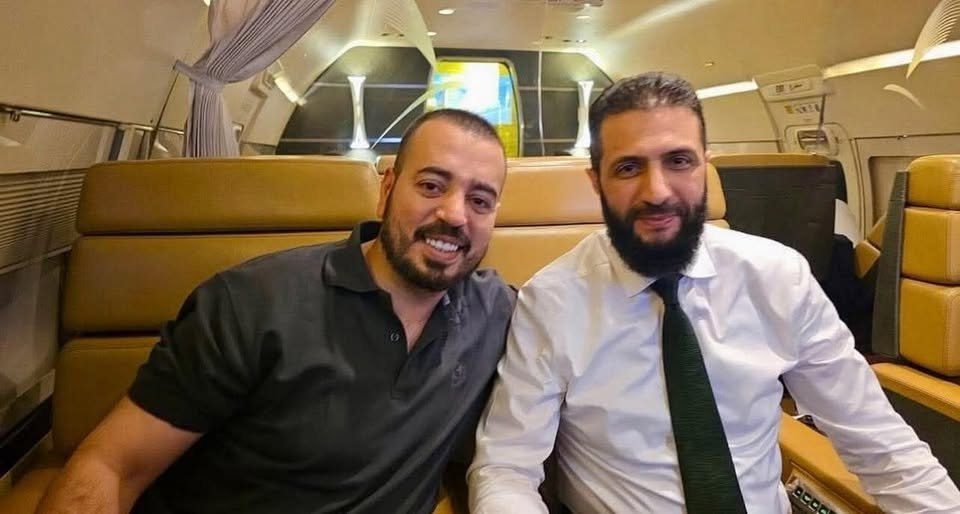
Masri’s case carries a different resonance. As a businessman with past ties to both humanitarian efforts and revolutionary groups, his return highlights the complex interplay between economics and politics in post-conflict Syria.
Public perception of Sharaa’s leadership hinges on how these cases are framed and followed. The releases demonstrate effective diplomacy and a commitment to national reconciliation. While possibly raising concerns about selective priorities and a lack of transparency regarding political dealings.
What Comes Next?
Bouidani and Masri’s returns indicate a phase defined as much by diplomacy as reconstruction. Syria must balance domestic expectations with regional realities, while addressing unresolved issues from years of conflict.
As Syria continues to navigate its post-conflict trajectory, these moments offer a glimpse into how power, perception and policy intersect. They reflect an emerging pattern of transactional diplomacy shaping Syria’s reintegration into the region, for now, they capture the attention of a nation searching for healing and stability.